
Metal Roofing
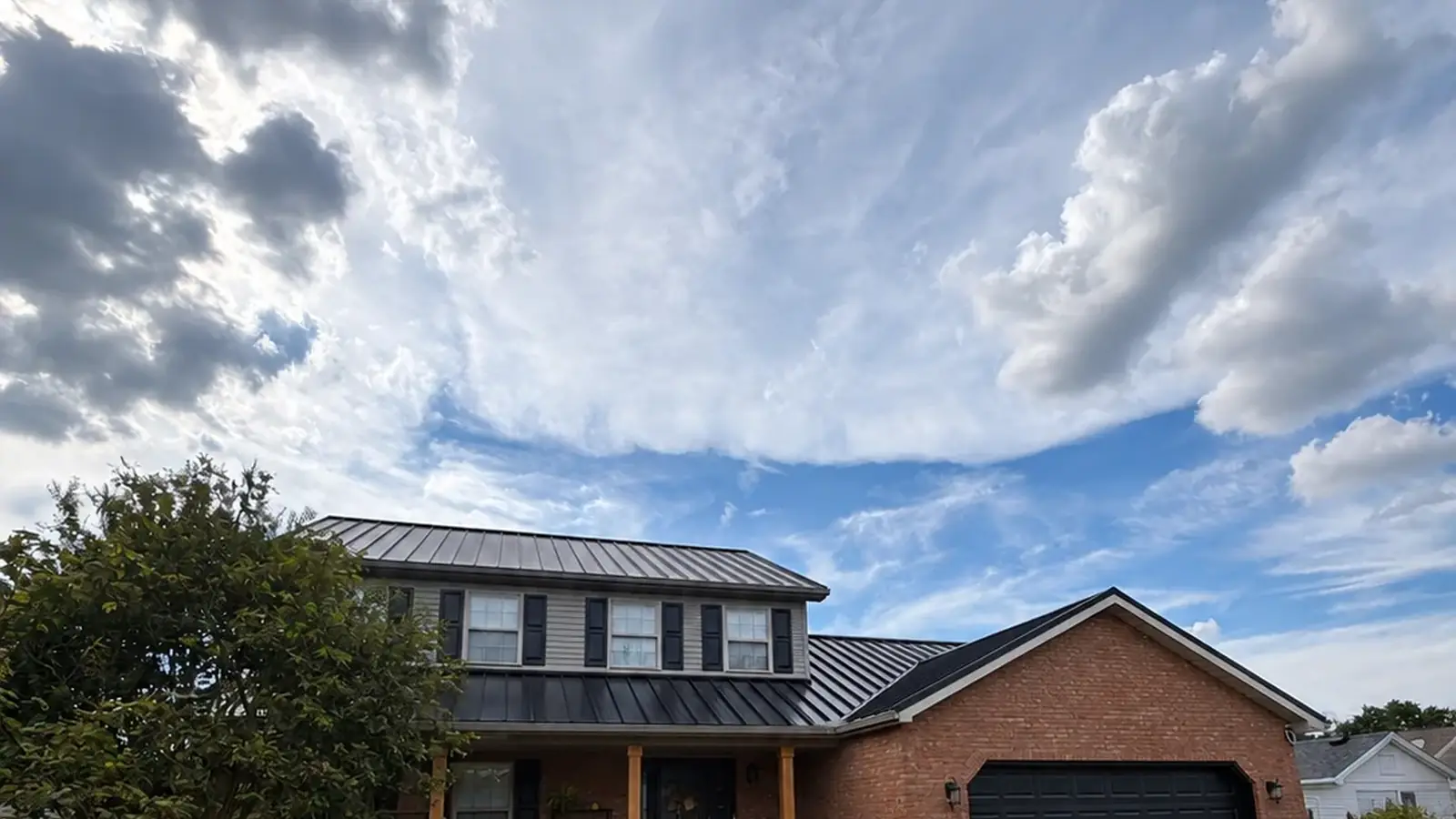
Standing Seam Metal Roofing in Evansville, IN
Roll-formed at the jobsite. Concealed fasteners. The spec, including gauge, finish, seam system, and flashing details, in writing before you sign.
Financing is available. Ask us for details when you request your inspection or quote.
Request your metal roof quote
We start with a short conversation about your roof and budget, then a free onsite inspection, then a written quote that specifies every component.
HomeVenture installs standing seam metal roofing on residential and commercial buildings in Evansville and the surrounding Tri-State area. Panels are roll-formed at the jobsite to field-measured lengths. Galvalume steel substrate in 24 or 26 gauge, PVDF or SMP paint systems, with snap-lock or mechanically seamed attachment. Flashing details are specified in the written proposal, and every install is photo-documented step by step.
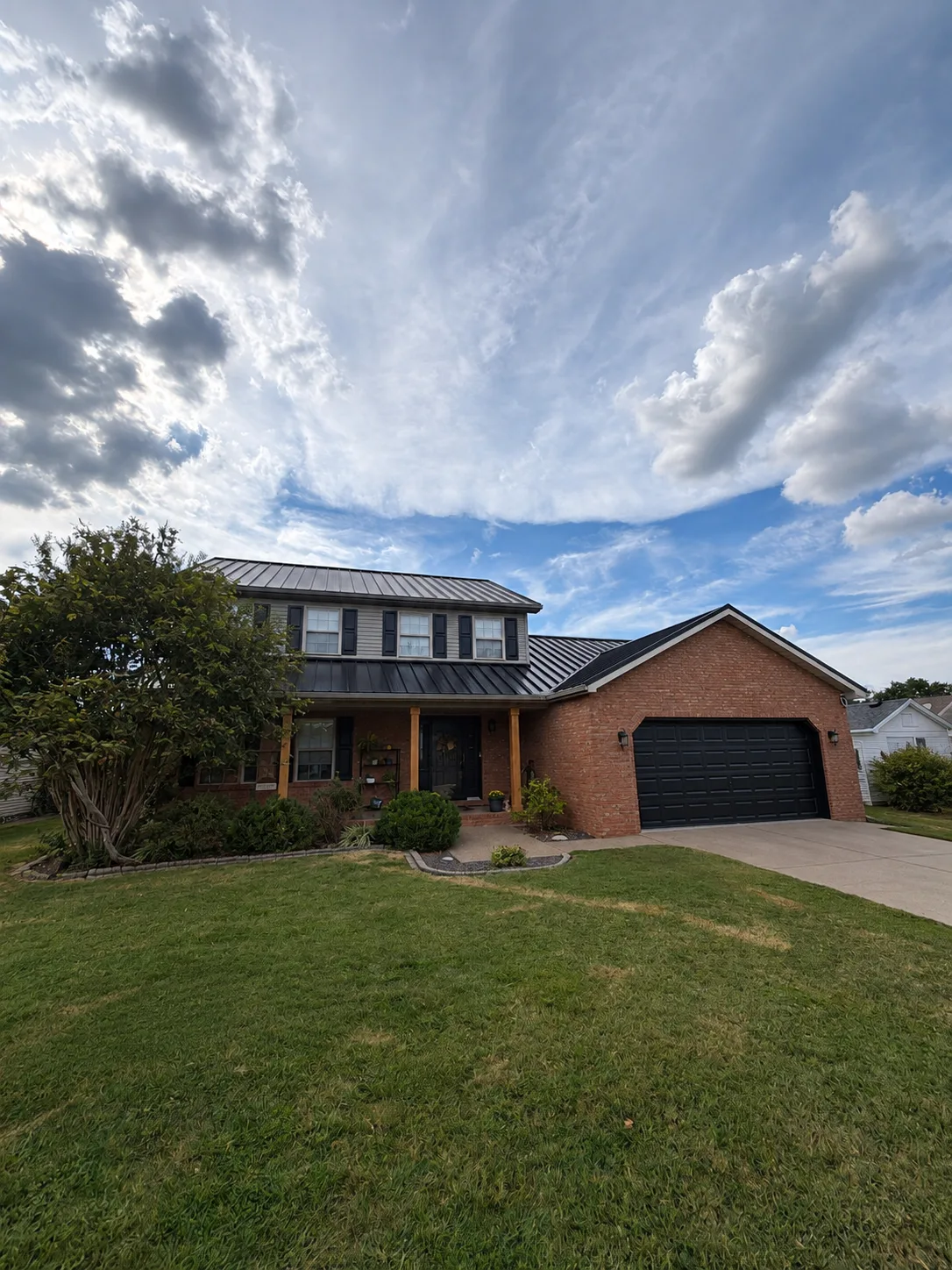
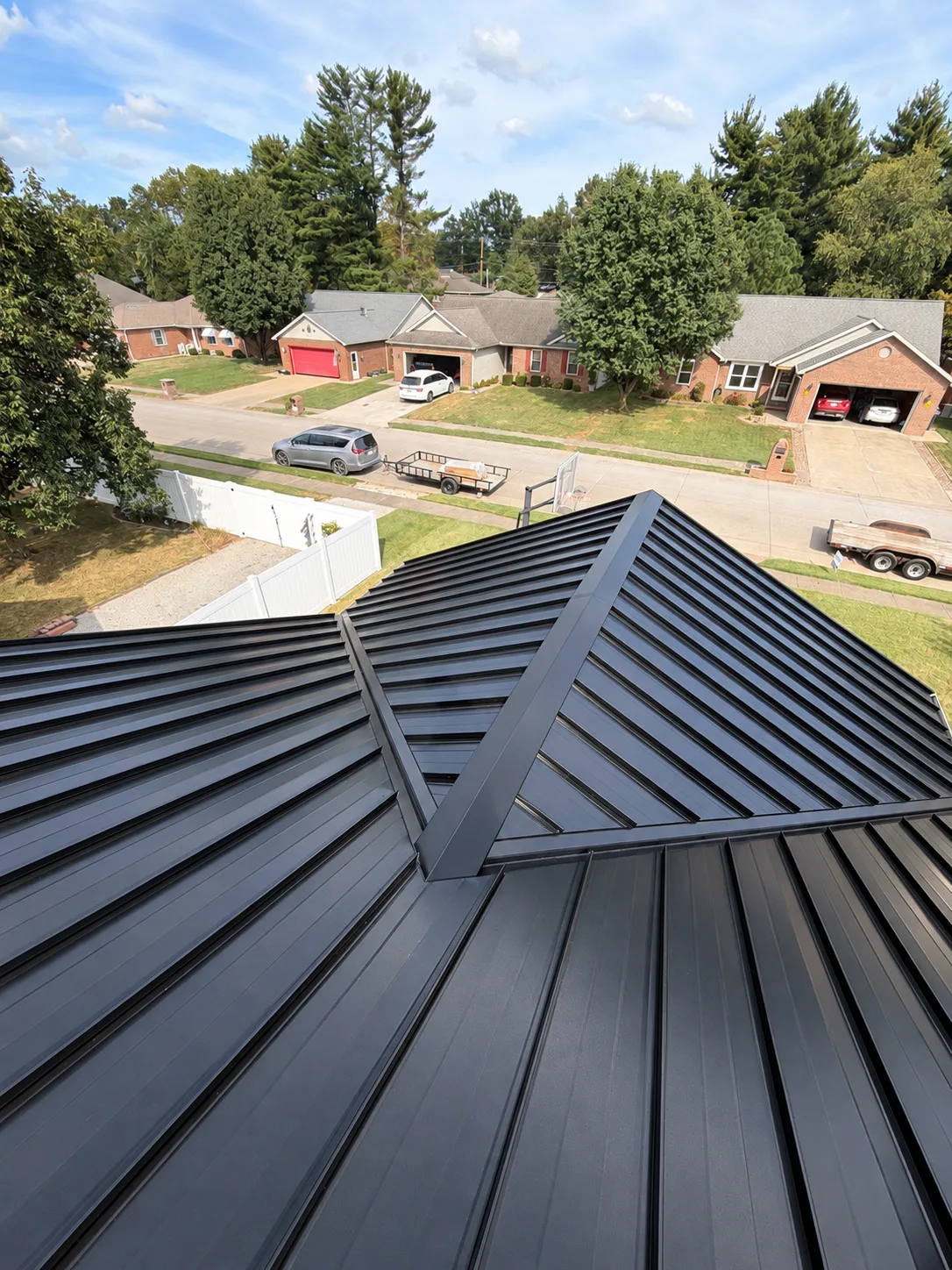
Standing seam work in the Tri-State.
What you are really paying for
A metal roof costs more up front than shingles. Here is what the extra money buys.
Fewer roofs over your lifetime in the house. A well-built shingle roof lasts a few decades. A well-built metal roof usually lasts much longer. If you plan to stay, you may never replace the roof again.
Less to think about. Standing seam has no exposed screws to check. The panels shed water, snow, and debris.
A roof built from a written plan. You get the exact panel, thickness, finish, and flashing details in writing before we start, and photos of every step.
When metal is the right call: you plan to stay 15 years or more, you want a roof you rarely think about, you have low-slope sections, or you want the look.
When shingles are the better call: you may sell in the next 10 to 15 years, budget is the main constraint, or the neighborhood look is shingles. We install both, and we will tell you which fits.
Standing seam is the premium metal format. Choose it if you want no exposed screws, the cleanest look, and the longest expected service. Choose exposed-fastener panels if you want metal at a lower cost and do not mind periodic screw and washer checks.
Roll-formed at the jobsite. Why we do it that way.
We form standing seam panels onsite. The coil goes into the roll-former, and the panel comes out at the field-measured length of your roof run, whether that's 8 feet or 40.
Photo slot: roll-former in operation
Reserved for a HomeVenture jobsite photo of the roll-former forming a panel. We do not use stock photography, so this stays empty until we have the real shot.
What that gets you:
Full-length panels without end laps where the roof geometry and panel handling allow. A panel the full length of the run has no horizontal seam to catch water.
Less transport and handling risk. Forming at the jobsite reduces the damage risk that comes with trucking and stacking finished long panels.
Field-measured fit. Panel lengths come off your roof, not off a takeoff sheet.
The system
The spec, in plain English
Steel and gauge
Galvalume substrate, which is steel with an aluminum-zinc alloy coating that resists corrosion better than plain galvanized. Two gauges:
- 24 gauge. The heavier, premium panel. Stiffer, more dent-resistant, and helps reduce visible waviness, though no gauge guarantees a perfectly flat appearance.
- 26 gauge. Lighter and more cost-effective, still a sound standing seam panel.
Paint systems, and why the difference matters
The paint system determines how the color holds up over decades:
- PVDF (Kynar-class). The premium finish with the best fade and chalk resistance. In our lineup, available on 24 gauge, and on 26 gauge in smooth coil only.
- SMP. A solid mid-tier finish at a lower cost, available on our 26 gauge.
Two panels can look identical at install. Fifteen years of Indiana sun tells you which paint system you bought. Yours is named in the written spec.
Panel texture
- Pencil ribs or striations. Subtle lines in the panel face that stiffen it and help reduce oil canning, the visible waviness that can appear in flat areas of metal panels. This is our standard recommendation.
- Flat panels. Available, and here is the honest truth: oil canning is generally cosmetic and can occur even when panels are manufactured and installed correctly. Coil quality, panel width, gauge, substrate flatness, and thermal movement all affect how visible it is. If you want the flat look, we require a signed acknowledgment of inherent oil canning, because we would rather be upfront now than have a conversation about light reflections later.
Seam systems
Three attachment approaches, matched to your roof and stated in the proposal:
- Snap-lock with nailing flange. Panels fasten through a concealed flange and snap together.
- Clip-install snap-lock. Panels attach with concealed clips that allow the metal to expand and contract with temperature.
- Mechanical single or double lock. Panel seams are crimped closed by machine. Double lock is used where the selected system and roof conditions call for a mechanically closed seam, including some lower-slope sections.
Which one fits depends on the roof's pitch, length of runs, and design. The inspection determines it; the proposal states it.
Flashing details, specified in writing
Ridge, hip, valley, sidewall, headwall, eave, rake, and penetration flashings are where metal roofs are actually won or lost, and where bids quietly differ. Our proposal specifies the flashing details for your roof, so you are never guessing which version of a standing seam roof you are getting. Two quotes for standing seam can be very different roofs; the flashing spec is how you tell them apart.
Panel dimensions
Multiple panel widths and seam heights are available, matched to the roof's proportions and stated in the spec.
What's under the metal
On a solid wood deck, our standard is full-coverage high-temperature self-adhered underlayment across the entire roof before a single panel goes on. Not strips at the edges. The whole deck.
That creates a continuous secondary water-resistive layer under the panels that seals around many roof fasteners. It does not replace correct panel seams and flashing, but if wind-driven rain or an ice event ever pushes water beneath the metal, it meets a sealed membrane instead of bare wood. The membrane installation is photographed before the panels cover it.
Open-framing and insulated commercial assemblies are different structures and use a different manufacturer-approved assembly. That assembly, including framing attachment, condensation control, fasteners, and lap details, is stated in the proposal before work begins.
How wind resistance actually works on a metal roof
A metal roof does not have one universal wind-speed rating. The panel, the clips or screws, the deck or framing, and the spacing between fasteners all work together as one tested assembly. Your proposal identifies the tested assembly your roof is built to, and the installation photos show the attachment as it was done.
Our process
How we install it
- 1
Inspection and system selection.
Measure roof geometry, pitch, panel runs, substrate, ventilation, and flashing conditions.
- 2
Written specification.
Panel profile, gauge, coating, width, seam system, attachment, underlayment, and flashing details.
- 3
Substrate preparation.
On reroofs, tear-off and deck repair documented with photos. On open-framing work, framing and the approved assembly documented.
- 4
Panel forming and installation.
Panel production, attachment, seaming, flashing, and penetrations photographed at defined checkpoints.
- 5
Quality control and closeout.
Finished roof verified; approved scope, product information, and installation photos delivered in your project file.
Comparing systems? The metal roofing hub lays all three metal systems side by side, the exposed fastener page covers the value option in the same level of detail, and the metal shingle page covers DECRA stone-coated steel for homeowners who want a traditional roof appearance.
Frequently asked questions
Questions about standing seam
What gauge should I choose, 24 or 26?
24 gauge is heavier, stiffer, and helps reduce visible waviness. It is the premium choice and what we recommend for most full-house standing seam. 26 gauge saves money and is still a sound panel. The right call depends on roof size, panel length, and budget; we price both so you can decide with the numbers in front of you.
What is oil canning, and should I worry about it?
Oil canning is visible waviness in the broad, flat areas of a metal panel. It is generally cosmetic and can occur even when panels are manufactured and installed correctly. Pencil ribs or striations help reduce its appearance, which is why they're our standard recommendation. Fully flat panels carry more inherent oil canning risk, which is why flat panels require a signed acknowledgment with us.
Is standing seam loud when it rains?
A metal roof over a solid deck, underlayment, attic space, and insulation is much quieter than an open-framed barn roof. The exact sound depends on the complete roof and ceiling assembly, so we won't promise every metal roof sounds identical to shingles, but the loud metal roof reputation comes from buildings with no deck underneath.
Can you install metal over my existing shingles?
No. We do not install metal over existing shingles. On reroof projects, we tear off to inspect and photograph the deck before building the new assembly. New construction and open-framing commercial buildings follow the manufacturer-approved assembly stated in the proposal. Read why we tear off every time.
How long can a coated-steel standing seam roof serve?
Properly specified coated-steel standing seam often serves 40 to 60 years. The metallic coating, paint system, cut-edge detailing, the environment the roof sits in, physical damage, and maintenance all affect actual life. That range describes a correctly specified coated-steel system, not a universal promise for every metal product on the market.
What maintenance does a standing seam roof still need?
Periodic inspection of flashings, sealants at penetrations, and drainage, plus keeping debris out of valleys and gutters and checking the roof after major storms. There are no exposed field fasteners to service, which removes the most common metal maintenance item, but the roof is still a system that should be looked at on a schedule.
Can standing seam work on a complicated residential roof?
Yes. Complicated roofs take more flashing and trim work at hips, valleys, walls, and penetrations. Panel layout and the seam system are chosen for the geometry of your specific roof, and every one of those details is specified in the proposal before the job starts.
Get the standing seam spec in writing
We measure the roof, select the panel system that fits it, and put the gauge, finish, seam system, underlayment, and flashing details in the proposal before you sign anything.